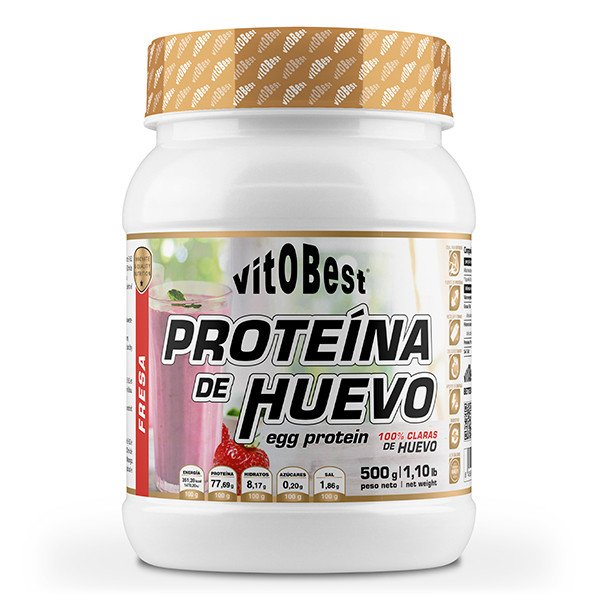
VitoBest Hue Protein – 500 g (3 Geschmacksrichtungen)
Abholverfügbarkeit konnte nicht geladen werden
Beschreibung
VitoBest® Eiprotein, eine der vollständigsten tierischen Proteinquellen, vollständig aus Eiweiß gewonnen. Empfohlen für Laktoseintolerante und Ovo-Lacto-Vegetarier. Dank seiner hohen Verdaulichkeit ist es ideal für Menschen mit Magen-Darm-Problemen. 20 % mehr Leucin als pflanzliche Proteine. Erhältlich in 3 Geschmacksrichtungen: Schokolade, Erdbeere und Vanille. 30 g entsprechen etwa 10 natürlichen Eiweißen.
Für wen?
Sportler mit Laktoseintoleranz, Ovo-Lacto-Vegetarier und Menschen mit Magen-Darm-Problemen, die ein hochverdauliches Protein suchen.
Vorteile
100 % natürliches Eiprotein. Hohe biologische Wertigkeit (vollständiges Aminogramm). Hohe Verdaulichkeit und Verträglichkeit. Kohlenhydratarm. Fett- und laktosefrei. 20 % mehr Leucin als pflanzliche Proteine. 3 Geschmacksrichtungen. Geeignet für Zöliakiekranke.
Wie man es einnimmt
Eine Dosis von 30 g in 300 ml Wasser mischen und schütteln.
Wann man es einnehmen sollte
Nach dem Training oder als Mahlzeitenersatz.
Zutaten
- Schokoladengeschmack: Albumin, Eipulver, Kakao Pulver, Aromen (Schokolade und Brownie), Natriumchlorid, Süßungsmittel (Sucralose) und Verdickungsmittel (Xanthangummi).
- Erdbeergeschmack: Eialbumin, Säuerungsmittel (Zitronensäure), Erdbeeraroma, Farbstoff (E-162) und Süßungsmittel (Sucralose).
- Geschmack Vanille: Eialbumin, Vanillearoma, Süßstoff (Sucralose) und Verdickungsmittel (Xanthangummi).
Nährwerte
| Komponente | Wert |
|---|---|
| Energiewert (pro 30 g) | 106,61 kcal / 446,07 kJ |
| Fett (pro 30 g) | 0,36 g |
| davon gesättigt | 0,18 g |
| Kohlenhydrate (pro 30 g) | 2,22 g |
| davon Zucker | 0,05 g |
| Proteine (pro 30 g) | 23,15 g |
| Salz (pro 30 g) | 0,64 g |
| Eialbumin (pro 30 g) | 26,95 g (≈ 10 Eiweiß) |
Warnhinweise
Allergene: Ei. Glutenfrei. Außerhalb der Reichweite von Kindern aufbewahren. Nicht als Ersatz für eine abwechslungsreiche Ernährung verwenden.
Share

Blogartikel
Alle anzeigen-
L'mTOR (m-TORC1 + m-TORC2) e crescita muscolare...
Nel panorama della fisiologia muscolare e della ricerca scientifica applicata al bodybuilding, uno dei protagonisti assoluti dei processi di crescita è rappresentato da mTOR (mechanistic Target Of Rapamycin), una proteina...
L'mTOR (m-TORC1 + m-TORC2) e crescita muscolare...
Nel panorama della fisiologia muscolare e della ricerca scientifica applicata al bodybuilding, uno dei protagonisti assoluti dei processi di crescita è rappresentato da mTOR (mechanistic Target Of Rapamycin), una proteina...
-
Proteine Whey prima e dopo il workout: dosaggio...
Le proteine Whey, conosciute anche come proteine del siero del latte, sono tra gli integratori più utilizzati nel bodybuilding e negli sport di forza per sostenere la sintesi proteica muscolare,...
Proteine Whey prima e dopo il workout: dosaggio...
Le proteine Whey, conosciute anche come proteine del siero del latte, sono tra gli integratori più utilizzati nel bodybuilding e negli sport di forza per sostenere la sintesi proteica muscolare,...
-
Inibitori della miostatina e bodybuilding: mecc...
Gli inibitori della miostatina rappresentano un'avanguardia della ricerca medico-scientifica nel ramo della crescita muscolare e della performance atletica, con un focus particolare sulla longevità e nel mondo del bodybuilding. Approfondiamo...
Inibitori della miostatina e bodybuilding: mecc...
Gli inibitori della miostatina rappresentano un'avanguardia della ricerca medico-scientifica nel ramo della crescita muscolare e della performance atletica, con un focus particolare sulla longevità e nel mondo del bodybuilding. Approfondiamo...