


Vitamin D: D3 + K2 - 60 Capsules - 60 Servings - Beverly Nutrition
Vitamin D: D3 + K2 - 60 Capsules - 60 Servings - Beverly Nutrition
Unable to load pickup availability
Vitamin D: D3 + K2 - 60 Capsules - 60 Servings - Beverly Nutrition
Vitamin D: D3 + K2 - 60 Capsules - 60 Servings - Beverly Nutrition falls into the category well-being and health and is designed for those looking for practical and targeted support based on their performance, recovery or well-being goals.
🎯 Who is it useful for?
- those who want to support general well-being and micronutrients
- those who experience stress, tiredness or increased nutritional needs
- those looking for targeted support for energy, defenses or recovery
🔥 Main benefits
- support for daily well-being and nutritional balance
- help with energy, immunity or recovery
- useful supplement during periods of physical and mental stress
Vitamin D: D3 + K2 - 60 Capsules - 60 Servings - Beverly Nutrition
Vitamin D: The Perfect D3+K2 Synergy for Bones, Heart and Immune System
Vitamin D It is one of the most important hormones for human health, regulating as well 2000 geniuses and supporting bones, immune system, mood, heart and muscles. But vitamin D alone is not enough: without vitamin K2, the calcium absorbed thanks to D3 risks settle in the arteries instead of the bones, causing vascular calcification and paradoxical osteoporosis.
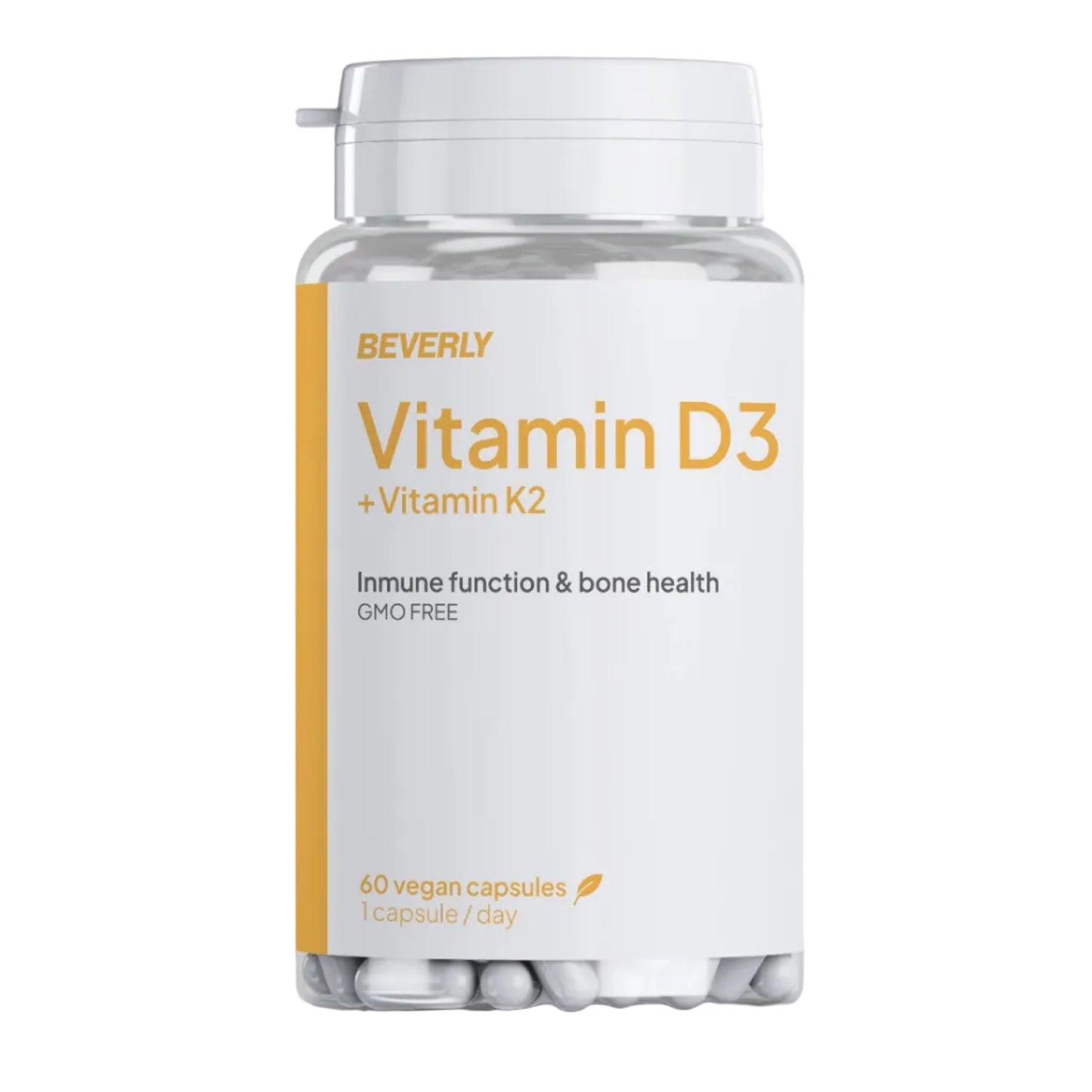
Beverly Nutrition Vitamin D3 + K2 offers you the perfect synergistic combination: 4000 IU (100 µg) Vitamin D3 (cholecalciferol) + 100 µg Vitamin K2 (menaquinone-7, MK-7) in just one capsule per day. This formula guarantees that the football comes absorbed thanks to D3 e directed correctly to the bones thanks to K2while protecting arteries and heart from calcification.
If you search "vitamin D", you are looking for a supplement that not only fills the deficiencies (80% of Italians have insufficient levels, especially in winter), but which optimize the distribution of calcium for all-round bone, cardiovascular and immune health. D3+K2 is the formula of the future, supported by hundreds of scientific studies.
Format and Duration
- Packaging: 60 softgel capsules
- Portions: 60 doses (1 capsule per day)
- Recommended dosage: 1 capsule per day
- Duration: 2 months (60 days)
- Net weight: ~25-30 g
- Packaging: Resealable jar in PET plastic
Nutritional Values per Serving (1 capsule)
| Nutritious | Per Serving (1 caps) | %VNR* |
|---|---|---|
| Vitamin D3 (cholecalciferol) | 100 µg (4000 IU) | 2000% |
| Vitamin K2 (menaquinone-7, MK-7) | 100 µg | 133% |
*VNR = EU Reference Nutrient Values
⚠️ IMPORTANT NOTE: The dose of vitamin D3 (4000 IU) exceeds the VNR by 20 times (200 IU/5 µg). This is intentional for:
- Correct widespread deficiencies (80% of the Italian population has levels <30 ng/ml)
- Reach optimal levels (40-60 ng/ml) in 2-3 months
- Compensate for poor sun exposure (winter, indoor work, northern latitudes)
4000 IU is safe for continuous use in healthy adults (EU safety level: up to 4000 IU/day without prescription).
Main Ingredients
1. Vitamin D3 - Cholecalciferol (4000 IU / 100 µg)
What is Vitamin D?
- Steroid hormone, not just vitamin
- Produced from the skin for UVB exposure (15-30 min direct sun per day)
- Active form: 1,25-dihydroxycholecalciferol (calcitriol)
- VDR receptors: Present in almost all cells of the body (brain, heart, muscles, bones, immune system)
Why D3 and not D2?
- D3 (cholecalciferol): Natural form, 87% higher bioavailability
- D2 (ergocalciferol): Plant/synthetic form, less effective, shorter half-life
- D3 from lanolin: Animal source (from sheep's wool), not vegan but highly bioavailable
Main Functions:
- Calcium absorption: Increases intestinal absorption by 30-40%
- Phosphorus absorption: Essential for bone mineralization
- Regulation 2000+ genes: Immunity, neuroplasticity, metabolism
- Immune system: T lymphocyte modulation, antimicrobial peptide production
- Mood: Serotonin and dopamine synthesis (depression reduction)
- Muscle strength: VDR receptors in skeletal muscles
Vitamin D deficiency in Italy:
- 80% of Italians has levels <30 ng/ml (insufficiency)
- 40% have levels <20 ng/ml (shortage)
- Worse in winter: October-March (latitude 42°N, insufficient UVB rays)
- Categories at risk: Elderly, menopausal women, indoor workers, dark skin, vegetarians/vegans, obese
2. Vitamin K2 - Menaquinone-7 (MK-7) (100 µg)
What is Vitamin K2?
- Vitamin K family: K1 (phylloquinone, from vegetables), K2 (menaquinones, from fermented)
- K2 forms: MK-4 (half-life 1-2 hours), MK-7 (half-life 72 hours, more effective)
- Source MK-7: Natto (Japanese fermented soy), fermented cheeses
- Unique function: Activates K2-dependent proteins (osteocalcin, Matrix Gla Protein)
Why is K2 Essential with D3?
- Without K2: Calcium absorbed by D3 is deposited in arteries, heart valves, kidneys (ectopic calcification)
- With K2: Football comes directed at the bones (activated osteocalcin) e removed from the arteries (MGP activated)
- Cardiovascular protective effect: Rotterdam study (2004) showed that 45 µg K2/day reduces cardiovascular risk by 50%
Main Functions:
- Osteocalcin activation: Protein that "binds" calcium to bones (mineralization)
- MGP (Matrix Gla Protein) activation: Inhibits arterial calcification
- Cardiovascular health: Maintains elastic arteries, reduces vascular stiffness
- Synergy with D3: Optimizes calcium use (D3 increases absorption, K2 directs destination)
Vitamin K2 deficiency:
- Rare hemorrhage (K1 role), but widespread subclinical deficiency (K2 role)
- Poor Western diet: Natto not consumed, few fermented cheeses
- Consequences: Simultaneous osteoporosis + arterial calcification ("calcium paradox")
Vitamin D: 10 Scientifically Proven Benefits of the D3+K2 Synergy
1. Optimal Bone Health 🦴
- D3 increases calcium absorption intestinal by 30-40%
- K2 activates osteocalcin which binds calcium to the bones (bone mineral density +3-5% in 12 months)
- Prevention of osteoporosis: Fracture risk reduction by 25-30% in post-menopausal women
- Synergistic effect: D3+K2 superior to D3 or K2 alone by 40-50%
- Evidence: 2015 meta-analysis shows that K2 reduces vertebral fractures by 60%, femoral fractures by 77%
2. Cardiovascular Protection ❤️
- K2 activates MGP (Matrix Gla Protein) that removes calcium from the arteries
- Reduction of coronary calcification by 37% after 3 years (Maastricht study)
- Reduction of arterial stiffness (PWV) of 12-15%
- D3 regulates blood pressure (hypertension reduction of 10-15% with optimal levels)
- Studio Rotterdam (2004): 45 µg K2/day → -50% cardiovascular risk, -25% total mortality
3. Prevention of Ectopic Calcification (Calcium Paradox) 🚫
- Without K2: Calcium from D3 is deposited in arteries, valves, kidneys, joints
- With K2: Calcium "cleaned" from soft tissue and directed to bones/teeth
- Prevention of kidney stones: K2 reduces risk of renal calcification
- Prevention of aortic stenosis: K2 slows heart valve calcification
4. Strengthening the Immune System 🛡️
- D3 modulates the innate and adaptive immune system
- Production of antimicrobial peptides (cathelicidin, defensins) increases by 300%
- Reduction of respiratory infections of 30-50% with optimal D3 levels (40-60 ng/ml)
- Prevention of autoimmune diseases: D3 regulates immune tolerance (useful in thyroiditis, rheumatoid arthritis, multiple sclerosis)
- COVID-19: 2020-2021 studies show that D3 levels >30 ng/ml reduce hospitalization risk by 50%
5. Menopause Support and Women's Health 👩
- Menopause accelerates bone loss (-2-5% bone density/year in the first 5 years)
- D3+K2 slows bone loss by 50-70%
- Reduction of hot flashes: D3 regulates thermoregulation
- Prevention of post-menopausal osteoporosis: Fundamental after 50 years
- Pregnancy and breastfeeding: D3 essential for fetal skeletal development (consult doctor for dosage)
6. Improved Mood and Reduced Depression 😊
- D3 increases serotonin synthesis (well-being neurotransmitter)
- VDR receptors in the brain: Hippocampus, prefrontal cortex (mood regulation)
- Studies: D3 integration reduces depressive symptoms by 20-30% in deficient subjects
- SAD (Seasonal Affective Disorder): D3 reduces winter depression
- Effective dosage: 2000-4000 IU/day
7. Muscle Strength and Athletic Performance 💪
- VDR receptors in skeletal muscles: D3 regulates muscle protein synthesis
- Increased strength of 10-20% in deficient subjects who integrate D3
- Reduction of the risk of falls in the elderly (-20-30% with optimal D3)
- Post-injury recovery: D3 accelerates tissue repair
- Athletes: Levels >40 ng/ml correlate with superior performance
8. Prevention of Type 2 Diabetes and Metabolic Syndrome 🩸
- D3 improves insulin sensitivity by 15-25%
- Reduction in fasting blood sugar by 5-10%
- Diabetes prevention: D3 levels >30 ng/ml reduce type 2 diabetes risk by 40%
- K2 supports glucose metabolism (undercarboxylated osteocalcin activation)
9. Dental Health and Cavities Prevention 🦷
- D3 increases calcium absorption for dental enamel
- K2 activates osteocalcin in dentin (internal tooth structure)
- Caries reduction: D3+K2 strengthen enamel and gums
- Prevention of periodontitis: D3 modulates gingival inflammatory response
10. Neuroprotection and Cognitive Health 🧠
- D3 protects neurons from oxidative stress and inflammation
- Alzheimer's risk reduction: D3 levels >30 ng/ml correlate with -30-40% risk of dementia
- Improved memory and concentration in deficient subjects
- Neuroprotection K2: Preliminary studies on myelin protection
Dosage and How to Take It
Standard Dosage
- 1 capsule per day with a meal containing fat
- Optimal timing: With breakfast or lunch (vitamin D is fat soluble)
- With dietary fats: Improves absorption by 30-50% (olive oil, avocado, nuts, eggs, fish)
Why With Fatty Meal?
- D3 and K2 are fat soluble: Absorbed in the intestine together with dietary fats
- Fat-free: Absorption reduced by 50-70%
- Amount of fat needed: 10-15 g per meal (1 tablespoon oil, 20 almonds, 1 medium avocado)
Optimal Timing
1. WITH BREAKFAST ⭐⭐⭐⭐⭐ (Best)
- Quando: Morning with breakfast rich in fat
- Example: Eggs, avocado, bread with olive oil, full fat yogurt, nuts
- Why: Vitamin D circadian rhythm is morning (natural production with morning sun)
2. WITH LUNCH ⭐⭐⭐⭐☆
- Quando: With main meal of the day
- Example: Salad with oil, salmon, pasta with oil-based dressing
- Why: Larger meal = more fat = optimal absorption
3. WITH DINNER ⭐⭐⭐☆☆
- Quando: Evening with dinner
- Why: Less optimal (D3 may interfere with sleep in sensitive individuals, controversial)
Dosages for Specific Objective
| Objective | Dosage D3 | Beverly capsules | Notes |
|---|---|---|---|
| Prevention of general deficiency | 1000-2000 IU/day | 1 caps every 2 days | Basic maintenance |
| Correction of minor deficiency (<20 ng/ml) | 4000 IU/day | 1 capsule per day | Standard Beverly |
| Correction of severe deficiency (<10 ng/ml) | 10,000 IU/day for 8-12 weeks | 2-3 capsules* | Under medical supervision |
| Maintaining optimal levels (40-60 ng/ml) | 2000-4000 IU/day | 1 capsule per day | Continuous use |
| Winter / low sun exposure | 4000 IU/day | 1 capsule per day | October-March |
| Pregnancy / Breastfeeding | 2000-4000 IU/day | Consult a gynecologist | Essential for fetus |
| Over 60 | 2000-4000 IU/day | 1 capsule per day | Reduced skin synthesis |
*For doses >4000 IU/day, consult a doctor and monitor blood levels
Blood Level Monitoring
25(OH)D Test - Total Vitamin D:
- Blood test (venipuncture or fingerstick)
- Frequency: 1 time every 3-6 months during integration
- Cost: €15-30 (SSN or private)
Optimal Levels:
- <10 ng/ml: Severe deficiency (rickets, osteomalacia)
- 10-20 ng/ml: Shortage
- 20-30 ng/ml: Insufficiency (80% Italian population)
- 30-40 ng/ml: Sufficient (recommended minimum)
- 40-60 ng/ml: OPTIMAL (therapeutic target)
- 60-80 ng/ml: Supra-optimal (safe, but not necessary)
- >100 ng/ml: Excess (toxicity risk)
- >150 ng/ml: Toxicity (hypercalcemia, renal calcification)
⚠️ NOTE: 4000 IU/day brings most people to 40-60 ng/ml in 2-3 months, without risk of toxicity (EU safety level: up to 4000 IU/day without prescription).
Vitamin D: Who is it suitable for?
✅ 80% of the Italian population: Diffuse deficiency/insufficiency (levels <30 ng/ml)
✅ Winter (October-March): Insufficient UVB rays at latitude 42°N
✅ Those who work indoors: Offices, shops, factories (no sun exposure)
✅ Women in menopause: Prevention of osteoporosis and cardiovascular health
✅ Over 60: Reduced skin synthesis (-50% efficiency after 65 years)
✅ Vegetarians and vegans: Poor dietary intake (D3 present only in fish, eggs, milk)
✅ Dark skin: Melanin reduces D3 synthesis by 90% (Africans, South Americans, Indians)
✅ Obese (BMI >30): D3 sequestered in adipose tissue, bioavailability reduced by 50%
✅ Athletes: Muscle support, recovery, immune system
✅ Those who suffer from depression/SAD: D3 increases serotonin
✅ Intestinal malabsorption: Celiac disease, Crohn's, cystic fibrosis
✅ Those who take anticoagulants: ATTENTION (see K2 contraindications)
Allergens and Warnings
Allergens
✅ Gluten free
✅ Lactose free
✅ Without soy
✅ GMO free
⚠️ NOT vegan: D3 from lanolin (sheep's wool), K2 MK-7 from Natto (vegan but fermented)
⚠️ Softgel capsules: Gelatin (bovine/porcine) or HPMC (vegetable) - check label
General Warnings
- Food supplements they do not replace a varied and balanced diet
- Hold out of reach of children under 18 years of age (unless under medical supervision)
- Do not exceed 1 capsule per day without medical supervision and blood tests
- Not intended to diagnose, treat, cure, or prevent any disease
- Consult a doctor in case of:
- Pregnancy or breastfeeding: D3 essential, but dosage to be agreed with the gynecologist
- Hypercalcemia (high kick): D3 may get worse
- Sarcoidosis, lymphomas: Risk of hypercalcemia (altered D3 metabolism)
- Chronic renal failure: Vitamin D accumulation
- Kidney stones: Monitor calcemia and calciuria
- Taking anticoagulants (warfarin, Coumadin): K2 CONTRAINDICATED (interferes with therapy)
- Liver pathologies: Reduced D3 conversion to active form
⚠️ ABSOLUTE CONTRAINDICATION: ANTICOAGULANTS
- Warfarin (Coumadin): K2 antagonizes anticoagulant effect (increases coagulation)
- New anticoagulants (dabigatran, rivaroxaban, apixaban): Less studied interaction, but possible
- Antiaggregants (aspirin, clopidogrel): Minor interaction, but consult a doctor
- Solution: Use only D3 (without K2) if on anticoagulant therapy
Pharmacological interactions
- Corticosteroids: Reduce calcium absorption (D3 useful to compensate)
- Thiazide diuretics: Reduce calcium excretion (risk of hypercalcemia with high D3)
- Antiepileptics (phenytoin, phenobarbital): Increase D3 metabolism (higher dose required)
- Orlistat (slimming drug): Reduces D3 absorption (take spaced apart)
- Statins: Possible interaction with cholesterol synthesis (D3 from cholesterol)
Possible Side Effects (Rare)
Vitamin D3 (4000 IU is safe)
-
Hypercalcemia (high calcium): Only with doses >10,000 IU/day chronic + predisposition
- Symptoms: Excessive thirst, frequent urination, nausea, vomiting, confusion
- Renal calcification: Only with sustained levels >100 ng/ml
- Mild nausea: Rare, may depend on taking on an empty stomach
Vitamin K2 (100 µg is safe)
- No known side effects at doses <1000 µg/day
- Anticoagulant interference: CONTRAINDICATED with warfarin
⚠️ Safety Dosage Beverly:
- 4000 IU D3 is the EU maximum safe level without prescription
- 100 µg K2 it is 2x the RDA dose (50 µg), but well below the safety limit (no upper limit established, doses up to 1000 µg studied without side effects)
Quality and Certifications Beverly Nutrition
✅ D3 from Lanolin: Natural source with high bioavailability (not synthetic)
✅ K2 MK-7 from Natto: Natural form with half-life 72 hours (maximum effectiveness)
✅ GMP (Good Manufacturing Practices): Production according to pharmaceutical standards
✅ Quality certifications: ISO 22000, HACCP
✅ Traceability: Batch and expiry date printed on the package
✅ Made in EU: Manufactured in the European Union according to CE regulations
✅ Softgel capsules: Gelatin or HPMC (check label)
✅ Purity test: Absence of contaminants, heavy metals, microbiological
✅ No GMO, gluten, lactose, soy
Vitamin D: FAQ (Frequently Asked Questions)
1. Why should D3 and K2 be taken together?
Scientific synergy:
- D3 increases calcium absorption intestinal (+30-40%)
- Without K2: Calcium is deposited in arteries, valves, kidneys (ectopic calcification)
- With K2: Calcium directed to bones (activated osteocalcin) and removed from arteries (activated MGP)
- Result: Stronger bones + cleaner arteries = optimal health
Football paradox: Without K2, you can have osteoporosis (too little calcium in the bones) and arterial calcification (too much calcium in the arteries) simultaneously.
2. How long does it take to correct a vitamin D deficiency?
- With 4000 IU/day: Levels increase by ~10 ng/ml per month
- Mild deficiency (20 ng/ml → 40 ng/ml): 2-3 months
- Severe shortage (10 ng/ml → 40 ng/ml): 3-4 months
- Control tests: After 3 months to check optimal levels
3. Can I take vitamin D all year round or only in winter?
All year round if:
- Indoor works (no sun exposure)
- You live in Northern Italy (latitude >45°N)
- You have dark skin
- You are over 60
- You are obese (BMI >30)
Winter only (October-March) if:
- Outdoor work with good sun exposure (15-30 min/day arms/legs uncovered)
- You live in Southern Italy (latitude <40°N)
- You have light skin
- You are young (<40 years old)
RECOMMENDATION: Most Italians benefit from integration all year round (80% have a shortage even in summer).
4. Can I take vitamin D if I am on anticoagulant therapy?
D3 YES, K2 NO:
- Vitamin D3: No contraindications with anticoagulants
- Vitamin K2: CONTRAINDICATED with warfarin/Coumadin (antagonizes effect)
Solution: Use D3-only supplement (without K2) if on anticoagulant therapy.
5. Does vitamin D make you fat?
NO. Vitamin D has 0 calories. In contrast, studies show that optimal D3 levels (40-60 ng/ml) facilitate weight loss by 10-15% (improves metabolism, reduces inflammation, regulates leptin).
6. Can I take vitamin D during pregnancy?
Yes, it's ESSENTIAL. D3 is critical for fetal skeletal, immune system and brain development. Pregnancy dosage: 2000-4000 IU/day (consult a gynecologist). K2 is generally safe, but dosage to be agreed with doctor.
7. Does vitamin D interfere with sleep?
Rarely. Some sensitive individuals report difficulty falling asleep if they take D3 in the evening (energizing effect). Solution: Take with breakfast or lunch instead of dinner.
8. How much sun does it take to produce vitamin D?
General rule:
- 15-30 minutes direct sun per day
- Arms and legs exposed (at least 25% body surface)
- 10.00am-3.00pm (more intense UVB rays)
- Without sunscreen (SPF 15 reduces D3 synthesis by 99%)
- Light skin: 15 min is enough
- Dark skin: 30-60 min needed
PROBLEM: In Italy (latitude 42-46°N), from From October to March UVB rays are insufficient (sun angle too low) → D3 synthesis reset even with sun exposure.
9. Can I have a vitamin D overdose?
Difficult with 4000 IU/day. Toxicity starts at:
- >10,000 IU/day chronic for months
- Blood levels >100 ng/ml
- Symptoms: Hypercalcemia (thirst, frequent urination, nausea, confusion)
4000 IU/day is safe for continuous use (EU safety level).
10. Is vitamin D3 from a supplement as effective as that from the sun?
Yes, it's identical. D3 from lanolin (supplement) has the same molecular structure as D3 produced by the skin. Bioavailability is comparable if taken with fats.
11. Should I also take calcium with D3+K2?
NOT NECESSARY if your diet contains:
- Dairy products: Milk, yogurt, cheese (300-400 mg calcium per serving)
- Green leafy vegetables: Cabbage, broccoli, rocket (100-200 mg/100g)
- Fish with bones: Sardines, anchovies (300-400 mg/100g)
- Mineral water rich in calcium: (200-400 mg/L)
Daily target: 1000-1200 mg calcium/day (from diet + possible supplementation). D3+K2 optimize use of the calcium already present, there is no need to add more calcium if the diet is adequate.
12. Can I give vitamin D to children?
Yes, but pediatric dosage:
- 0-12 months: 400 IU/day (recommended by pediatricians)
- 1-3 years: 600-1000 IU/day
- 4-18 years: 1000-2000 IU/day
Beverly D3+K2 4000 IU is for adults (>18 years). For children, use pediatric supplements with appropriate dosage.
Comparison: Beverly D3+K2 vs Solo D3 vs Solo K2
| Feature | D3+K2 Beverly | D3 only | K2 only |
|---|---|---|---|
| Calcium absorption | ✅ Excellent (D3) | ✅ Excellent | ❌ No effect |
| Direction calcium bones | ✅ Excellent (K2) | ⚠️ Partial | ✅ Excellent |
| Prevention of arterial calcification | ✅ Maximum (K2) | ❌ Increased risk | ✅ High |
| Cardiovascular health | ✅✅ Synergy | ⚠️ Paradox risk | ✅ Good |
| Bone effectiveness | ✅✅ Maximum | ⭐⭐⭐☆☆ | ⭐⭐⭐☆☆ |
| Long-term security | ✅ Maximum | ⚠️ Risk of calcification without K2 | ✅ High |
Verdict: D3+K2 is superior to D3 or K2 alone. Scientifically proven synergy.
Why Buy on Wellfitstore.com
✅ Original Beverly Nutrition Products: 100% authentic, tamper-evident seal
✅ Fast Shipping: Delivery to Italy in 2-5 working days
✅ Secure Payments: SSL, PayPal, credit cards, bank transfer
✅ Dedicated Customer Support: Email info@wellfitstore.com, pre and post-sales support
✅ Easy Return: 30 days money back guarantee
✅ Loyalty Program: Accumulate points on every purchase
✅ Verified Reviews: Over 4.7/5 stars for D3+K2 Beverly
✅ Transparency: Complete product sheets, visible certifications
✅ Privacy Guaranteed: Data protected according to GDPR
🛒 Order now at www.wellfitstore.com
📧 Do you have questions? Write to info@wellfitstore.com
Storage and Duration
- Temperature: Store at 15-25°C, in a cool, dry place
- Avoid: Heat, direct light, humidity
- After opening: Close the jar tightly, consume within 24 months
- Shelf life: 36 months from production (check expiry)
- Degradation: D3 and K2 are stable if stored correctly
Conclusion: Vitamin D - Invest in Your Health at 360 Degrees
Vitamin D it's not just "the bone vitamin": it's a essential hormone which regulates over 2000 genes, supports the immune system, mood, muscles, heart and brain. But D3 alone is not enough: without K2, you risk the football paradox (weak bones + calcified arteries).
Beverly Nutrition Vitamin D3 + K2 offers you the perfect synergy: 4000 IU D3 to correct widespread deficiencies + 100 µg K2 MK-7 to direct calcium where it is needed (bones) and remove it from where it is NOT needed (arteries). 2 months of integration to optimize bone, cardiovascular, immune health and beyond.
80% of Italians have vitamin D deficiency. Don't wait for fractures, osteoporosis, frequent infections or depression to take action. Invest in your long-term health today. 🌞🦴❤️
🛒 Buy Vitamin D3 + K2 on Wellfitstore.com
📧 Support: info@wellfitstore.com
🌐 www.wellfitstore.com
Scientific References:
- van Ballegooijen AJ, et al. The synergistic interplay between vitamins D and K for bone and cardiovascular health. J Nutr Biochem. 2017
- Geleijnse JM, et al. Dietary intake of menaquinone is associated with a reduced risk of coronary heart disease: the Rotterdam Study. J Nutr. 2004
- Autier P, et al. Vitamin D status and ill health: a systematic review. Lancet Diabetes Endocrinol. 2014
- Holick MF. Vitamin D deficiency. N Engl J Med. 2007
- Theuwissen E, et al. The role of vitamin K in soft-tissue calcification. Adv Nutr. 2012
- Schwalfenberg GK. Vitamins K1 and K2: The Emerging Group of Vitamins Required for Human Health. J Nutr Metab. 2017
Share

Blog articles
View all-

Proteine Whey prima e dopo il workout: dosaggio...
Le proteine Whey, conosciute anche come proteine del siero del latte, sono tra gli integratori più utilizzati nel bodybuilding e negli sport di forza per sostenere la sintesi proteica muscolare,...
Proteine Whey prima e dopo il workout: dosaggio...
Le proteine Whey, conosciute anche come proteine del siero del latte, sono tra gli integratori più utilizzati nel bodybuilding e negli sport di forza per sostenere la sintesi proteica muscolare,...
-

Inibitori della miostatina e bodybuilding: mecc...
Gli inibitori della miostatina rappresentano un'avanguardia della ricerca medico-scientifica nel ramo della crescita muscolare e della performance atletica, con un focus particolare sulla longevità e nel mondo del bodybuilding. Approfondiamo...
Inibitori della miostatina e bodybuilding: mecc...
Gli inibitori della miostatina rappresentano un'avanguardia della ricerca medico-scientifica nel ramo della crescita muscolare e della performance atletica, con un focus particolare sulla longevità e nel mondo del bodybuilding. Approfondiamo...
-

Rapé Amazzonico Huni Kuin: Cos'è, Origine e Tra...
Desde Wellfitstore y Mundo Chamanico queremos contribuir a divulgar esta tradición con respeto, información transparente y reconocimiento de los pueblos que mantienen vivos estos conocimientos.El Rapé amazónico es una preparación...
Rapé Amazzonico Huni Kuin: Cos'è, Origine e Tra...
Desde Wellfitstore y Mundo Chamanico queremos contribuir a divulgar esta tradición con respeto, información transparente y reconocimiento de los pueblos que mantienen vivos estos conocimientos.El Rapé amazónico es una preparación...


